
Chevon Powell awarded 2025 Jim Ellis Spirit Award from Mountains to Sound Greenway
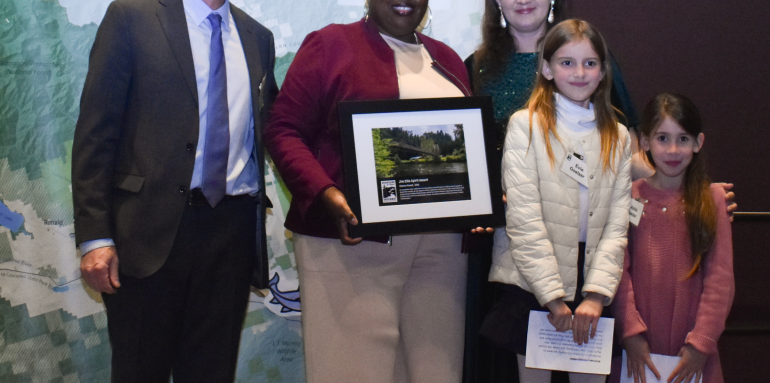

Chevon Powell awarded 2025 Jim Ellis Spirit Award from Mountains to Sound Greenway
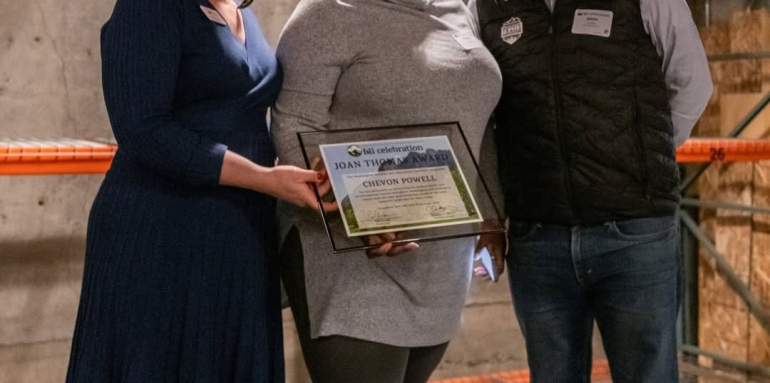
Chevon Powell awarded 2024 Joan Thomas Award from WA Wildlife & Recreation Coalition.
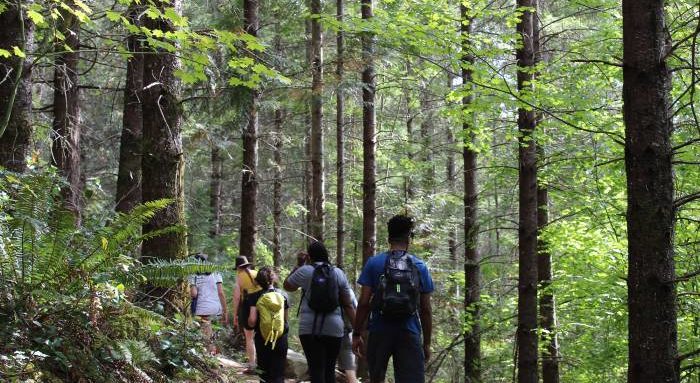
At the Refuge Outdoor Festival, an inaugural campout for inclusion, participants got into the nitty-gritty of hiking, camping, bird watching — and relating to one another. They came away a community eager for next year’s event.
Last month, the first-of-its-kind Refuge Outdoor Festival took place at Tolt-MacDonald Park near Carnation, Wash. Located in Snoqualmie Valley, the lush open space at the confluence of the Snoqualmie and Tolt Rivers overlooks the Cascade foothills.
The festival connected people of color (and their “allies,” according to the website) with activities like hiking, yoga, and camping. But it was a community open to everyone — and outdoor enthusiasts of all “levels.”

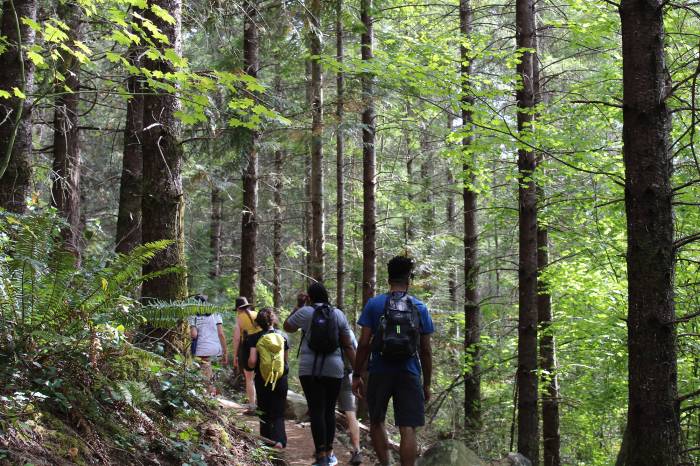
For three days, participants slept in tents, vans, and onsite yurts while community leaders from Climbers of Color, GirlTrek, Latino Outdoors, Outdoor Asian, and others shared their messages.
Themed activities like “Transitioning From Day Hiker to Mountaineer” and group topics like the “Untold History of Communities of Color in the Outdoors” also allowed festival-goers to pick and choose their experiences.
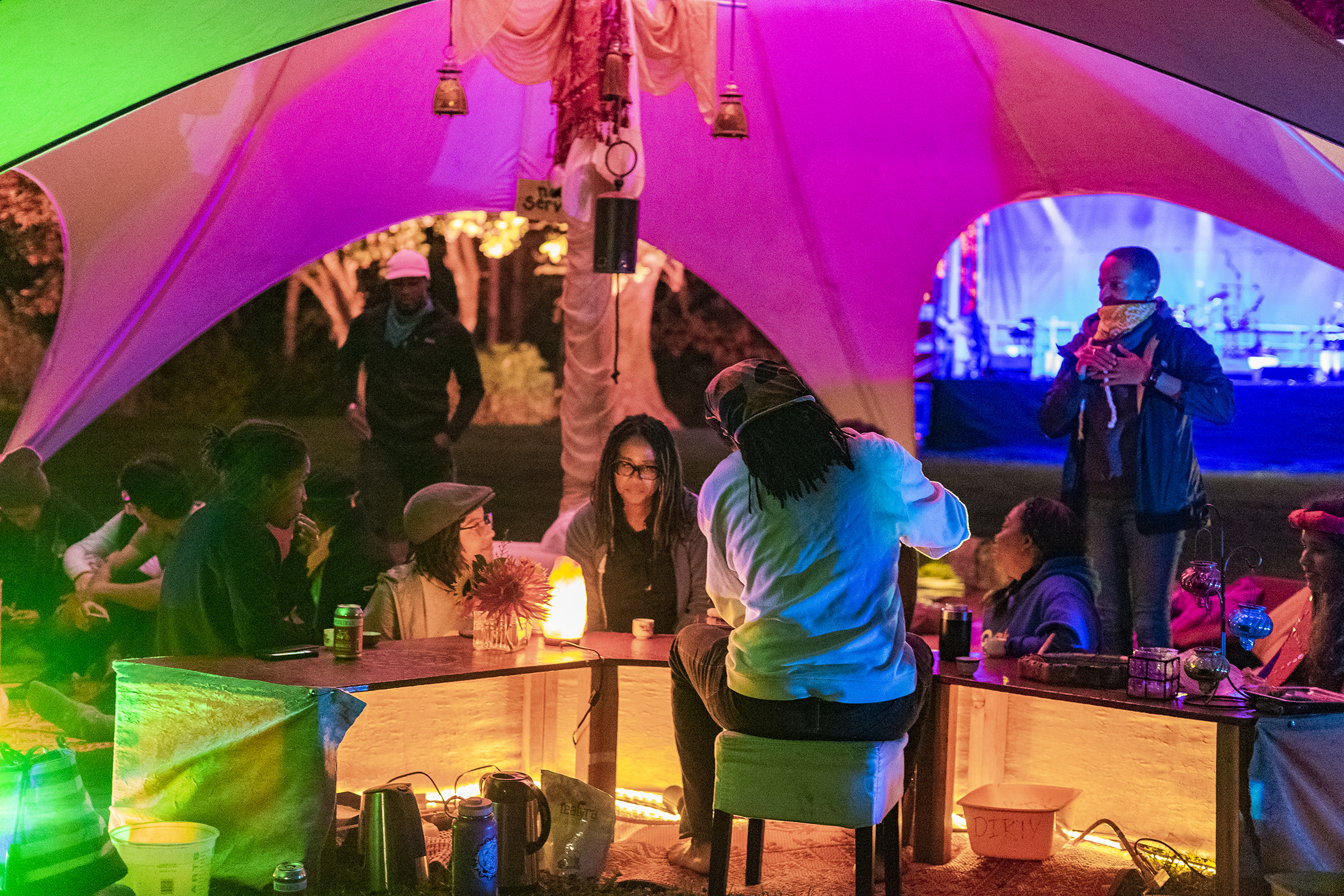
The inaugural campout for inclusion tackled tough topics in open conversations. For example, an interracial couple led a discussion on race and privilege. The topic resulted in a packed house.
“With events like this, we get excited, then it all starts to fade away,” said organizer Chevon Powell. “So I challenged all the people who made it to ‘closing circle’ to do one action or have one conversation in the next week.”
Powell tasked participants and sponsors with putting conversations into action after leaving Refuge.
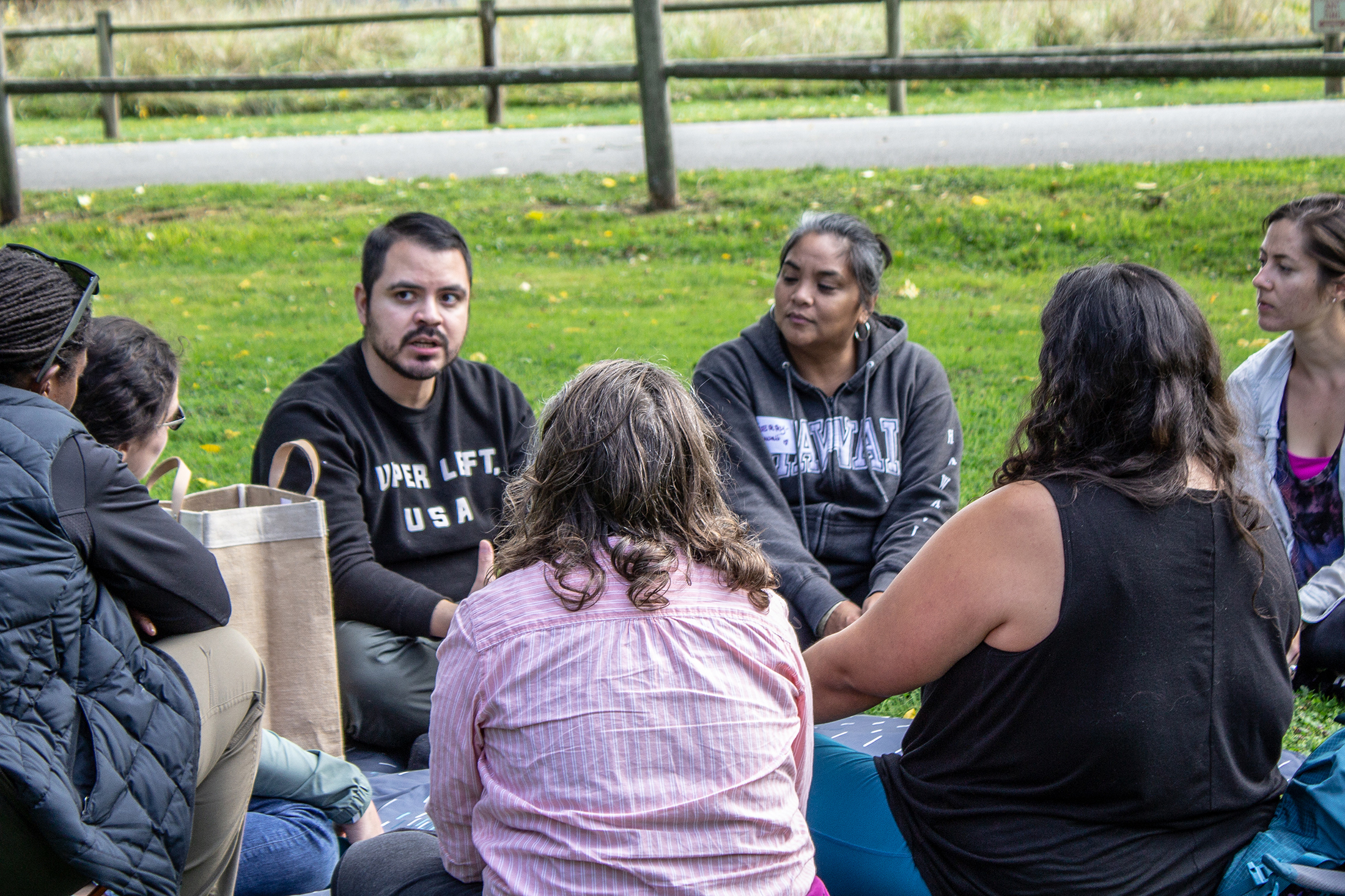
She suggested some prompts: How do we come to the outdoors in an equitable way? How do we address diversity gaps in adventure? And how do we talk about the outdoors in nonoppressive ways?
“Like the mountains are not here for us to conquer,” she said.
Festivarians could choose from a variety of mellow outdoor activities. Many cooked outdoors in a communal space. And the Seattle Audubon Society led a morning bird-watching tour.
“The number of people who wanted to go bird watching at 7 a.m. was really surprising,” Powell said. “We did it three times that day.”

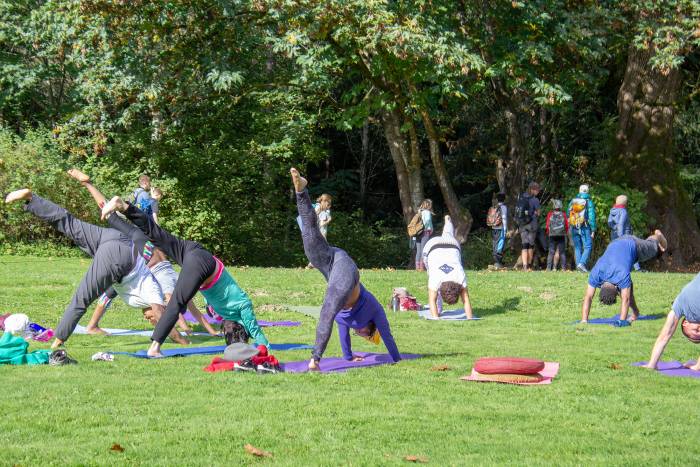
It reminded her to meet festival-goers “wherever they are,” especially in their relationship to nature.
There was a session on bikepacking. And a mobile bike unit was on hand to teach people bike-fixing basics. That came in extra handy for one participant, whose bike broke down after she rode it all the way to the festival.
About 125 people showed up for the first Refuge Outdoor Festival, about 75 of whom camped out. Powell said it was a remarkable turnout given that she began advertising only two months before the event.
A lot of the weekend was spontaneous. The coffee cart bailed, for example, so campers trekked 10 minutes to town for some Starbucks. A few crashers showed up with the DJs. They had so much fun that they asked Powell if they could come back the next day.

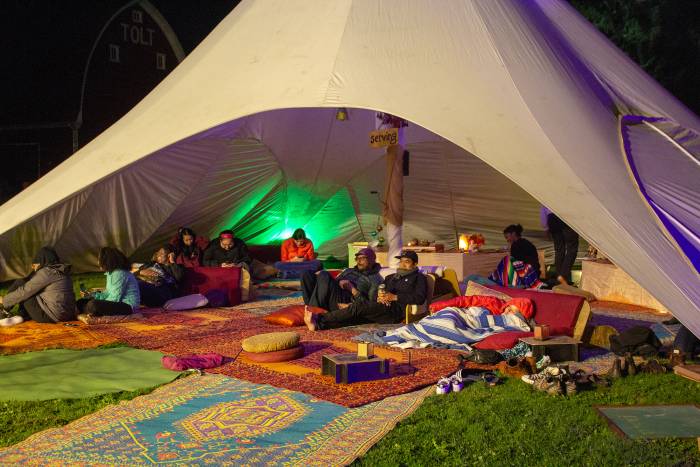
That’s to be expected with a first-time event.
Powell said Outdoor Refuge Festival is coming back, and first-time attendees sounded excited for year two. One said she was happy to get in on the ground level because there might be lines next year.
Based on early feedback, Powell is looking into single-day ticket options, a gear rental partner, more scholarships, and other opportunities for next year. The goal is to make it even easier for people of all colors — and outdoors backgrounds — to participate.
For more information, visit the Refuge Outdoor Festival website.
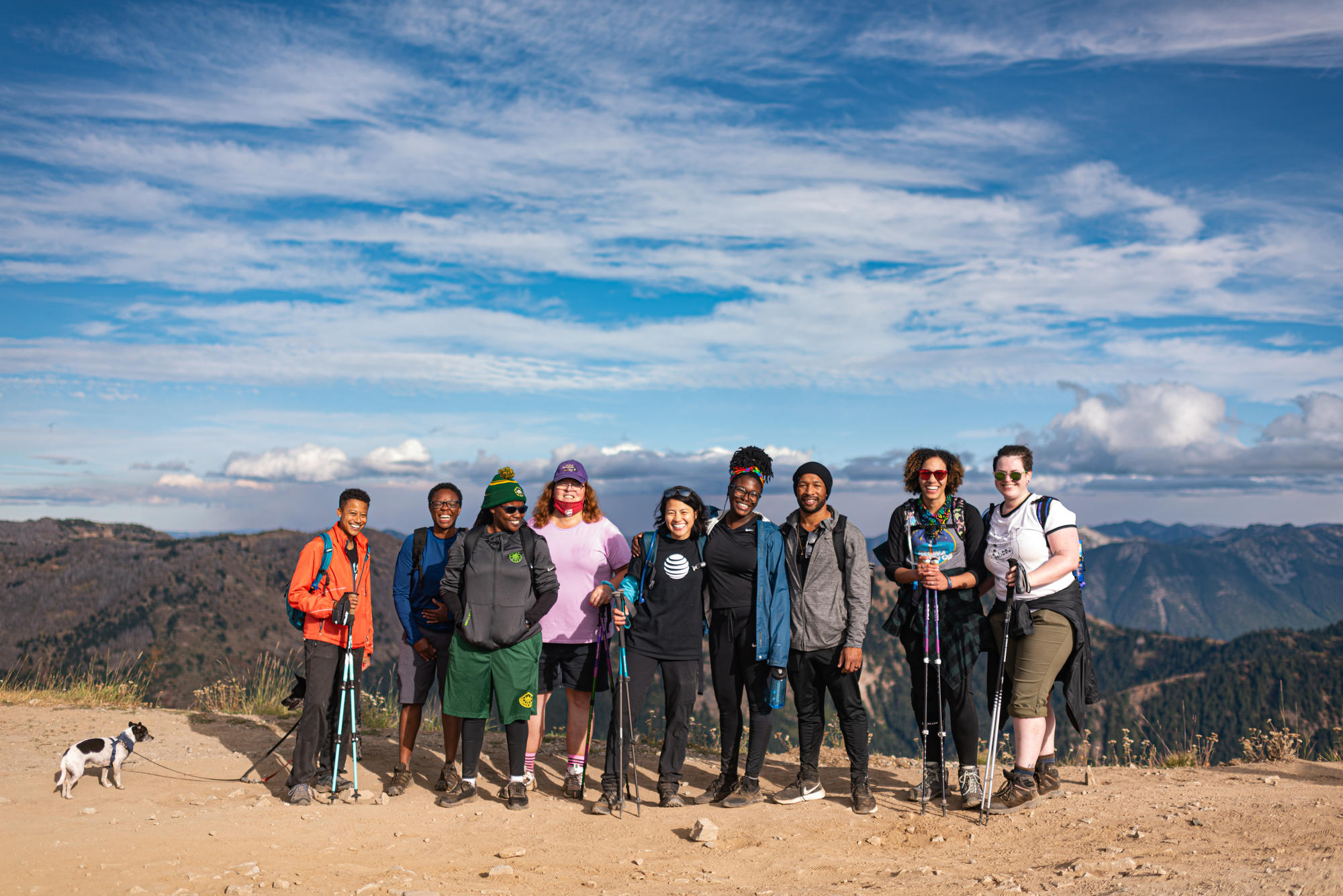
The outdoors weren’t hard for BIPOC communities to access, but discriminatory practices and perpetuated cultural beliefs may have led them to become less accessible throughout U.S. history.
“When we think about the Great American cowboy, those folks were Black and Mexican,” Nuñez of CSU Fullerton said. “They weren’t necessarily the white cowboys that we see on the spaghetti westerns.”
The relationships between people of color and the outdoors evolved as powerful players in U.S. history shaped the country and its landscape in their favor.
The country’s first white settlers colonized Indigenous lands and communities; in the 19th century, some white people romanticized the outdoors in contrast to urban areas, which were largely populated by people of color and immigrants and often viewed as unsanitary. Even President Theodore Roosevelt’s dedication to the national parks system reflected a desire to keep masculinity alive specifically among white men, Krymkowski said.
Such discrimination and exclusion throughout history have left Black communities with fewer opportunities to explore interests in outdoor activities like hiking, he said.
The legacy of these patterns still show today. Over the years, Black Americans age 29 and older faced higher drowning death rates than their white counterparts, a fact Krymkowski said ties directly back to segregationist policies governing swimming pools.
Incidents like the 2020 racial profiling of New York City bird watcher Christian Cooper, on whom a white woman called the police, reveal to some a pattern of continued racism in the outdoors.
For many communities of color, the outdoors can also represent a real danger.
“I’m from the South,” Powell of the Refuge Outdoor Festival said. “We had really some severe ramifications if you went into the woods alone. Or people were taken into the woods alone and came back – if they came back – traumatized.”
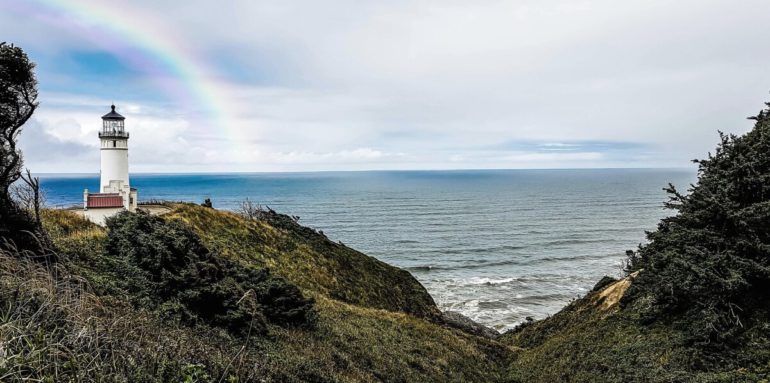
Trina Baker didn’t grow up hiking, camping or adventuring in the snow. However, as soon as she began walking outdoors with GirlTrek, a program designed to get Black women outdoors, Baker said she fell in love with nature.
“Hiking has been my spiritual place,” Baker said at a Washington State Parks and Recreation Commission work session today in Ilwaco, Washington, near Cape Disappointment State Park.
Now, Baker has made part of her mission to get other Black Washingtonians to head outdoors.
A recent survey by the Black Washingtonians Workgroup on Outdoor Recreation found fewer than 1.5% of State Parks visitors are Black.
Some barriers included safety concerns, a lack of access to transportation, and access to outdoor equipment, which can be expensive.
The 12-member workgroup surveyed Black Washingtonians about these barriers to participating in outdoor recreation. In addition, the group presented potential solutions to lower those barriers.
Reco Bembry, the workgroup’s facilitator, said learning more about these barriers is a critical conversation. However, he said, this discussion should be only the beginning.
“It’s a very critical conversation to have about ways to create greater humanity for our citizens, and I think outdoor recreation serves to do that a lot,” Bembry said.
The workgroup reviewed at least 76 scholarly articles, he said.
Talking to Black community members, the group found at least 57 barriers to getting outdoors. The biggest concern, Bembry said, is safety, especially for parents taking children outside.
“Outdoor Recreating While Black, in Washington, is a modern-day safety hazard,” Bembry said.
To help with potential hazards, a Black couple, Anthony and Marlie Love, created a travel show that rates how safe and comfortable they feel while traveling around the Pacific Northwest, similar to the green book that guided travelers across the country.
The Black community has faced more than 100 years of barriers to recreate in state parks, which were created through systematic racism and white supremacy, he said.
“Parks were set up specifically for people that don’t look like me,” Bembry said. “When parks and recreation as a whole was set up, it was a place for white citizens to go to get away from this diversity in the urban settings.”
In addition, he said, laws and norms have led to the oppression of Black, Indigenous and People of Color, or BIPOC, Washingtonians in the outdoors.
Now, parks have changed, Bembry said, which is something he’s noticed after spending around six decades outside.
“I also can still feel the barriers that exist,” he said.
However, Bembry said the racist system that set up parks is changing slowly.
“It’s like turning a cruise ship. It takes time,” he said.
In addition, adequate transportation can become a major barrier to getting people outside, as well as discretionary money for entrance fees, gas, and outdoor clothing, Bembry said.
To help with some of those struggles, Bembry and Baker recently held two outdoor events for Black Washingtonians, with transportation, food and entrance fees covered by Black Washingtonian groups and businesses.
Meeting up at a specific location to travel together can reduce transportation issues, Bembry said. In addition, communicating plans in-depth beforehand helps people understand what to expect, he said.
Good advertising, for example, attracted 68 people to a snow tubing trip in March – it was designed for 30 people.
“That’s a good problem to have,” Baker said.
Bembry said Black people tend to trust community members who are planning and leading events, such as Black People Who Hike or Outdoor Afro. These groups can help people learn how to get outdoors, a significant barrier when first starting out, Bembry said. People seem to be more comfortable initially going outdoors in large groups with 10 or more people, he said.
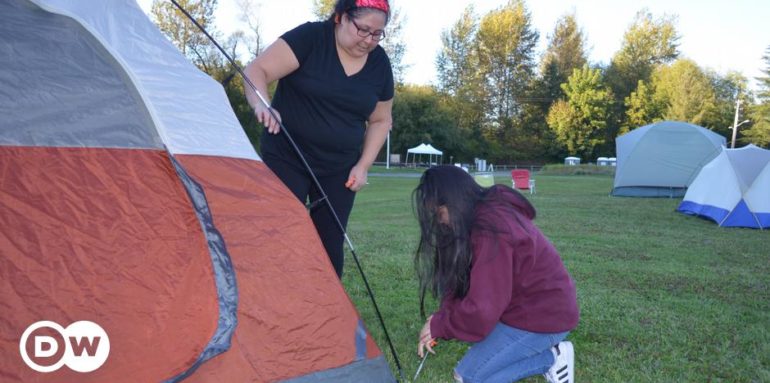
“You’d be surprised about how many people in multiple communities around this country don’t know how to set up a tent,” Bembry said. “These are simple learning lessons that a lot of people are uncomfortable with and just need to learn.”
A little bit of help from more experienced people can go a long way, he said.
Experienced community members also can help Black people overcome generations of what Bembry called historical trauma, which leads to a fear of nature, Bembry said. He said he still remembers his grandmother telling him not to go into the woods at night.
“A lot of folks are overcoming that fear,” he said. “It takes one, two or three trips for folks to really get over that completely. The risk and reward function kicks in about the second or third trip.”
In addition, equipment costs can create a hardship for people first looking to head outdoors, Bembry said.
For example, he said, hiking boots can cost $200 to $300.
For her part, Commissioner Sophia Danenberg, the only Black member of the Washington State Parks and Recreation Commission, said it’s also hard to know where to buy equipment when first heading outdoors. She purchased her first outdoor equipment from Goodwill, including an external-framed backpack formerly used by the Boy Scouts.
Moreover, Washington State Parks needs more inclusivity in its own hiring, volunteer development, and vendor partnerships, said Chevon Powell, a member of the workgroup who owns the outdoor event company Golden Brick Events.
Earlier in the meeting, Valerie Roberts, State Parks Volunteer Program manager, said the Volunteer Program is building relationships with new volunteers from many communities in Washington.
For her part, Danenberg said State Parks isn’t diverse in its employment or volunteers. At an event in Goldendale last week, she said she saw one other person of color.
“I’ve got to say, I saw one Black woman, and just as I was about to be like, ‘Hey Girl!’ when I realized that she was part of Gov. Inslee’s security detail,” Danenberg said.
To increase diversity, equity and inclusion when dealing with the public, she suggested increasing diversity training and the diversity of camp hosts at state parks.
To make camp hosting easier, Commissioner Mike Latimer said State Parks could look at creating camp host positions in places with yurts or cabins so that hosts don’t have to buy their own RVs.
However, Danenberg said, it’s difficult to bring in more diverse volunteers.
“You’re effectively asking for free labor from people who have been denied the ability to build generational wealth,” Danenberg said.
Next, Bembry said, the state needs to study more deeply how Black Washingtonians recreate outdoors, including focus groups and a more extensive survey of people who don’t already visit state parks.
“Reconnecting with nature is an inalienable right,” Bembry said.
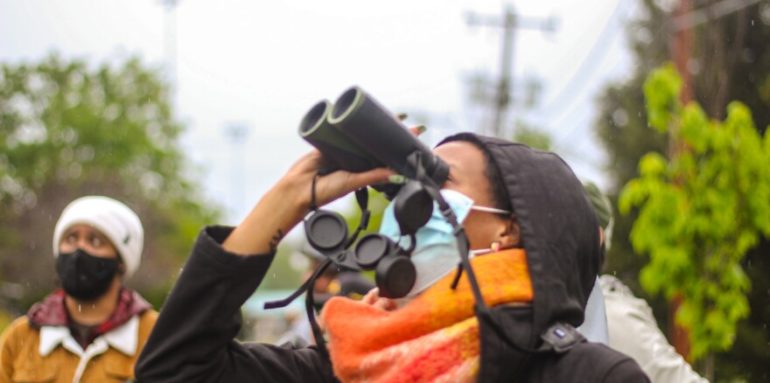
The Seattle chapter of the Audubon Society announced that it is dropping “Audubon” from its name because of its association with white supremacy.
There are hundreds of state and local chapters of the National Audubon Society, the nonprofit dedicated to protecting birds and their habitats, but Seattle Audubon is one of the largest in the country.
Earlier this month, the board voted to change the chapter’s name because the man the organization is named after – illustrator, painter and bird lover John James Audubon, author of the seminal work “The Birds of America” – owned enslaved people and opposed abolition.
J. Drew Lanham, a former board member of the National Audubon Society and a wildlife ecology professor at Clemson University, called the move courageous.
Lanham, who has written about Audubon and left the national chapter over concerns the nonprofit was not doing enough about racial equity, says organizations need to grapple with what to do about monuments that represent the worst of humanity. Names are part of that, Lanham said.
Audubon was a “genius artist in many ways but a despicable human being,” Lanham said.
“To excuse inhumane acts as just being in the context of their time is, I think, a lazy excuse,” Lanham continued. “Those are the excuses the privileged tend to lean on when they don’t want to make changes.”
Lanham added that it is particularly important for conservation efforts to strive toward diversity and inclusion because environmental conditions often impact Black, Indigenous and other people of color the most.

Sundaes Outside
/
Golden Brick Events
Chevon Powell, who five years ago started King County’s Refuge Outdoor Festival, which is specifically geared toward diverse communities, called the decision to change the chapter’s name long overdue.
Powell says those who take up birding will slowly learn about the history and then might think to themselves “oh, actually, this space isn’t for me.”
Powell says without significant changes – such as the stripping of names of white supremacists – “eventually, some folks will be like ‘I’m going to step away from this.”
Last year, the Audubon Naturalist Society, a Washington, D.C.-based environmental organization, announced it, too, would be removing “Audubon” from its name, but it is not affiliated with the National Audubon Society. Seattle Audubon is the first large chapter of the National Audubon Society to signal its intention to change its name.

Louis Agassiz Fuertes
/
Public domain, via Wikimedia Commons
Claire Catania, executive director of Seattle Audubon, said discussions about a possible name change at the organization coincided with larger questions about the role of racism in the United States that arose in 2020 as protests over police brutality erupted across the country.
Soon after, dozens of American birding experts launched “Bird Names for Birds,” a campaignto change the names of birds named after white men who perpetuated colonialism and racism. For example, the group has pointed to the need to change the name Bachman’s Sparrow, a bird named after the Reverend John Bachman, a former slave owner.
Catania says the biographies of Audubon and others whom birds are named after have taken their majority white membership by surprise.
Still, she says she hopes other chapters will study the issue and make similar changes.
“It’s our hope that by making this public declaration now we can blaze a trail that hopefully will be easier for others to follow,” Catania said.
In the end, Seattle Audubon says its main goal is for more people to feel welcome in spaces dedicated to conservation.
Seattle Audubon plans to hold a listening session on Tuesday, and choose a new name by the end of the year.
For many people, getting outside can be a chance to relax and unwind. For people of color, it can also mean having to deal with racism.
People of color and their allies gathered outside Seattle last weekend at a festival aimed at changing that.
At the Tolt-Macdonald Park in Carnation, a deejee played music while attendees of the second annual Refuge Outdoors Festival line up for pancakes.
Chevon Powell founded the festival after an incident when a policeman pulled her over in Vermont and wouldn’t believe she was there to go hiking.
She said she wanted to create a safe space and also build community.
“It’s not just a fun weekend. It’s about learning the skills, sharing the skills. People can get connected in the local area so that they can continue to do outdoor activities and so they can feel comfortable doing those beyond this weekend,” Powell said.
Powell has plans to grow the festival.

August 16, 2019
https://p.dw.com/p/3O0sS
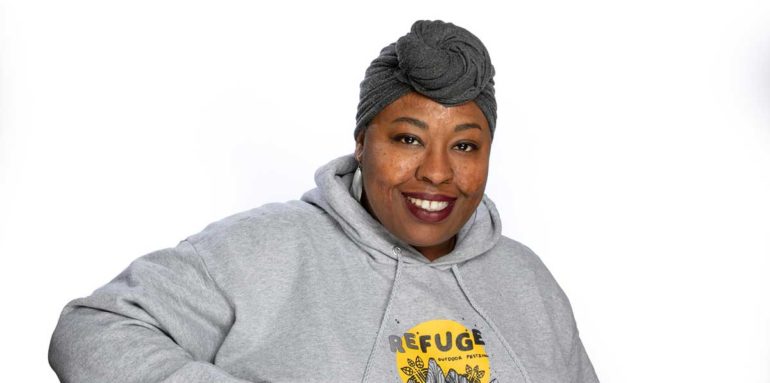
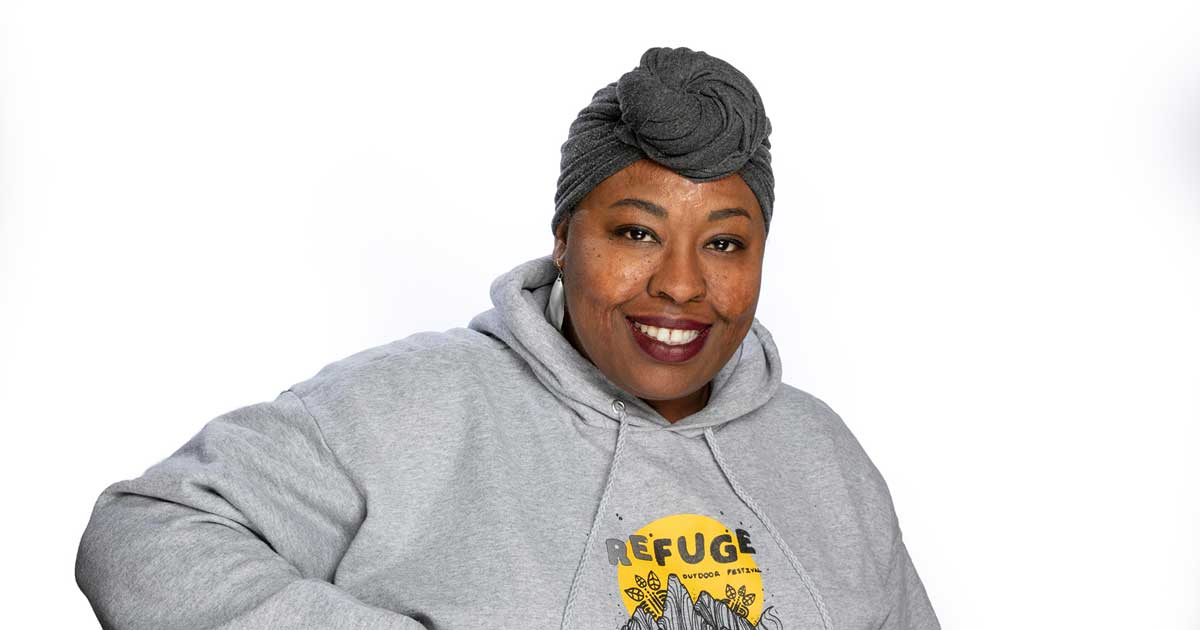
Juneteenth, also known as “Emancipation Day” or “Freedom Day,” is an African-American holiday that commemorates the day when enslaved Black Americans were emancipated on June 19th, 1865, in the former Confederate States of America. Although Juneteenth is not a federally recognized holiday, Ventures wants to celebrate this critical moment in American history and honor the liberation of people whose rights were stolen. A unique way that our community can acknowledge this holiday is by embracing the outdoors at the upcoming events that are hosted by Chevon Powell’s Golden Bricks Events.
Born and raised in Texas, Chevon has always loved the outdoors ever since she was a child and would fish with her grandmother and go to summer camp. “The outdoors has always been a part of my life,” said Chevon. Chevon joined Ventures’ community of entrepreneurs two years ago, with over twenty years of experience in the event industry. She has been a trusted consultant for organizations and was recognized by the South Seattle Emerald as a source of fostering a healing community for people of color.
This year, she won the fan-favorite prize at InnoVentures, Ventures’ pitch competition and fundraiser. Chevon created the first Refuge Outdoor Festival in 2018 to elevate people of color and their experiences outdoors. Chevon stated, “When people are interacting with the outdoors, they are healthier as an individual and as a community.”
Chevon’s appreciation for the outdoors had never faltered, even when she was pulled over by the police in Vermont on a solo backpacking trip along the Appalachian Trail. “It was a terrifying experience. They looked at me and didn’t perceive me to be a part of the outdoors.” Chevon’s story is intertwined with many others who have experienced similar encounters. This prompted her to launch her business, Golden Bricks Events, to change the narrative around how others view people of color interacting with the outdoors. “It’s not nature that’s discriminatory.” Through her consulting and event business model, she challenges other organizations and businesses to think through a community-centered inclusive lens.
Representation matters. That is a statement that Chevon lives by when showcasing her work through the Refuge Outdoor Festival. The mission of her business is to create experiences that meet the needs of people of color who want to enjoy the outdoors in a safe environment. The Refuge Outdoor Festival is usually a two-day camping event geared toward people of color that is centered on outdoor recreation, community conversations, art, and music.
This year, it is set to be an online event on September 18th – 20th. Although the opportunity for a large public gathering is limited, it will not stop the event from being held virtually. It will still feature local artists and community members who support creating a safe space for people of color.
Chevon’s dream is to work herself out of business so that everybody can feel included in outdoor activities and hobbies. However, as a Black business owner, there are a different set of challenges that come with managing a small business—as is still evident by racial discrimination in financial institutions. Chevon mentioned “being a solo entrepreneur has always been challenging, so it’s good to have support and guidance from organizations like Ventures” that are aware of the widespread economic inequalities in this country.
Growing up, Chevon knew the importance of celebrating Juneteenth as a holiday in her community. “We should all be aware of this very important day,” Chevon stated. As a child in Texas, Juneteenth was not a holiday that she and her family could take off from school and work. However, it was a day that her family encouraged her to commemorate to remember what Black Americans and allies strived to achieve after years of being devalued as humans by the transatlantic slave trade. It is an opportunity to remind Americans of the past, and to amplify equitable access to opportunities and success for African Americans.
You can follow Chevon’s work on Instagram and Facebook to receive notifications about upcoming events and opportunities.
Hosted by the North Cascades Institute
Class Tuition: $15
The outdoor scene presents an opportunity for all people to connect with our shared earthly home. However, the conservation and recreation fields in the U.S. have been disproportionately shaped by white, able-bodied figures and the trail has not been a welcoming place for diverse people.
While Black, Indigenous, and people of color (BIPOC) have always been out on the trail despite this history, we’re now seeing a welcome increase in participation, as well as overlapping conversations about social justice and outdoor recreation. More people of diverse identities are getting out, having fun, and adding to the richness of outdoor culture. Discussions about diversity in the outdoors help to grow a diverse and just outdoor scene.
Please join us in welcoming Chevon Powell to our virtual platform. Chevon is the founder of Golden Bricks Events (GBE) and Refuge Outdoor Festival—an annual outdoor recreation camping experience geared toward Black, Indigenous, People of Color. She is an experienced event professional and community advocate for outdoor access and environmental justice.
Chevon will be sharing with us her story of exploring natural and social landscapes, as well as facilitating a reflective conversation in small groups.
This online program offers an opportunity to participate in a thought-provoking and inspiring conversation around building diversity in the outdoors.
For more information or to register click here.
