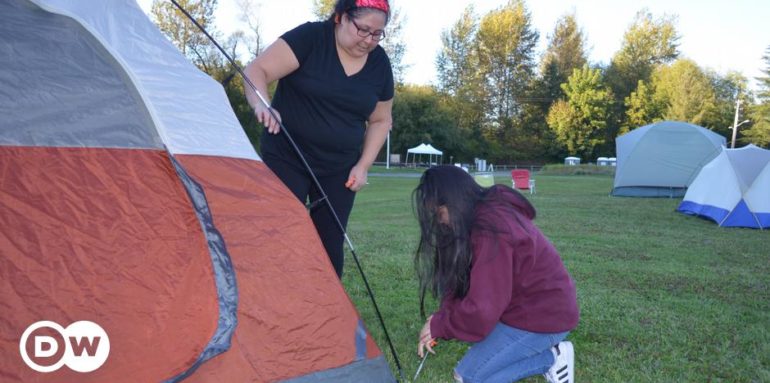
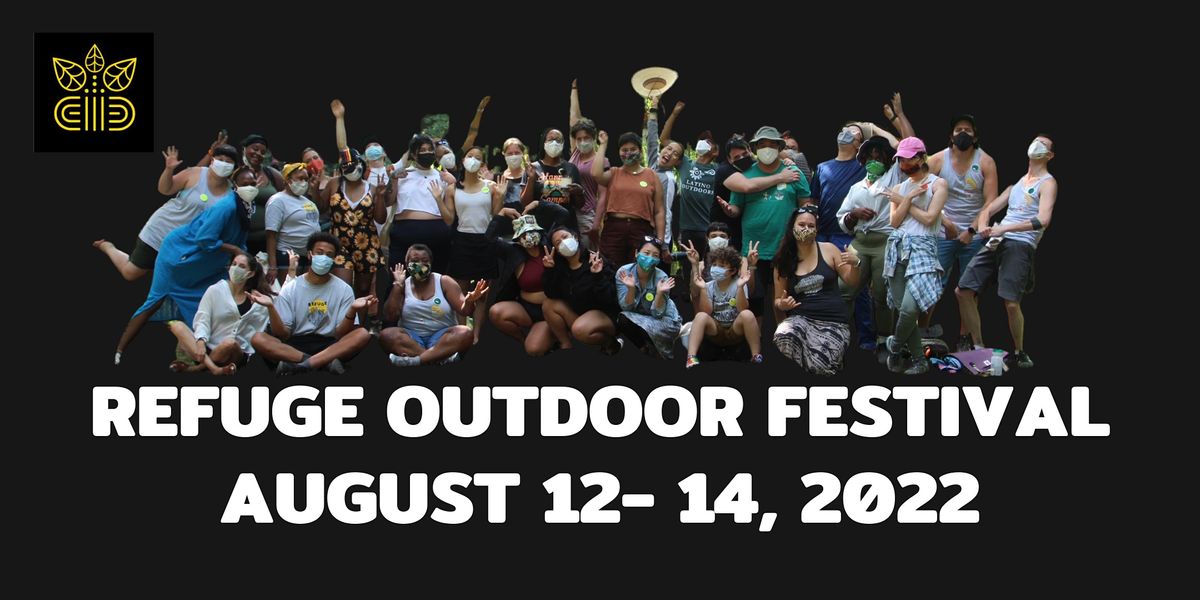
CARNATION, Wash. — Refuge Outdoor Festival has an event coming up Aug. 12-14 in Carnation, Washington.
“It’s a three-day camping experience geared toward black indigenous people of color to connect in the outdoors and build community,” explained Chevon Powell, the founder of Refuge Outdoor Festival.
In its fifth year, the festival will include a movie premiere, silent disco, workshops, outdoor activities, and more.
“The community has really taken a hold of it. We have people that travel in from across the country,” Powell shared. “People have said that its really life-changing for them.”
The fifth Refuge Outdoor Festival is happening at Tolt-MacDonald Park and Campground in Carnation, WA from Friday, Aug. 12 at 3 p.m. to Sunday, Aug. 14 at noon. Register for the event here.
The Refuge Outdoor Festival aims to show that outdoor recreation is for everyone, no matter your background or how you identify.
CARNATION, Wash — Geared up and ready for her first ever solo backpacking trip, Chevon Powell was excited.
But instead of focusing on the journey ahead at a park in Vermont, Powell, a Black woman, said she was pulled over by police as soon as she was on site.
“The police said it was unbelievable that I was in the outdoors,” Powell told KING. “It was one of the scariest moments of my life.”
Powell said she knows there is a lack of diversity in outdoor recreation.
Powell could have let this incident change her view of the outdoors and her passion to explore.
“I took that and knowing my skills, I said, ‘let me do something to create a safer space for people that look like me to be connected to the outdoors,'” Powell said.
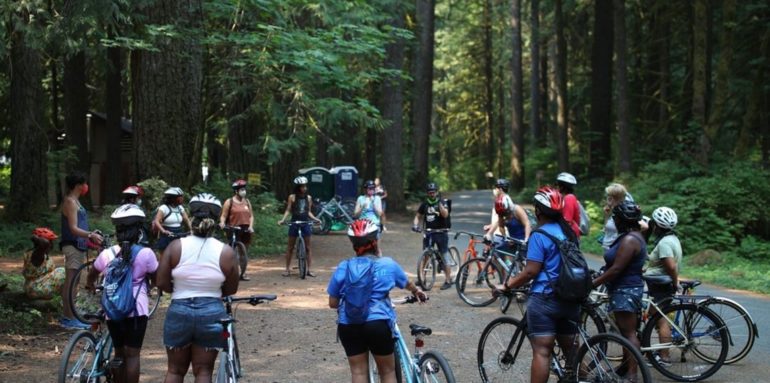
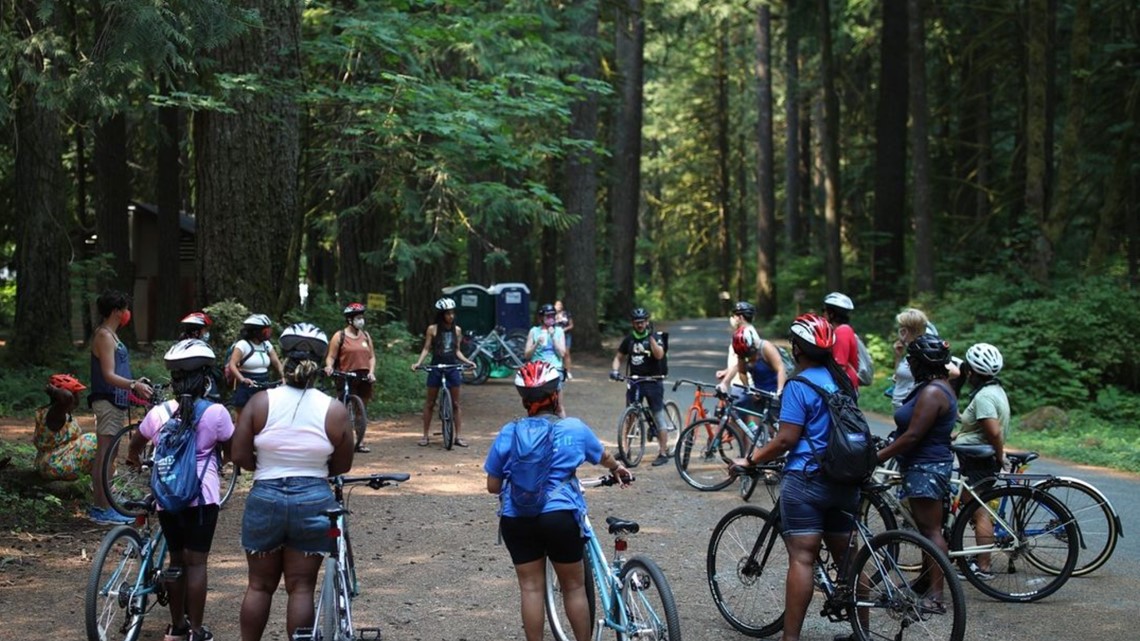
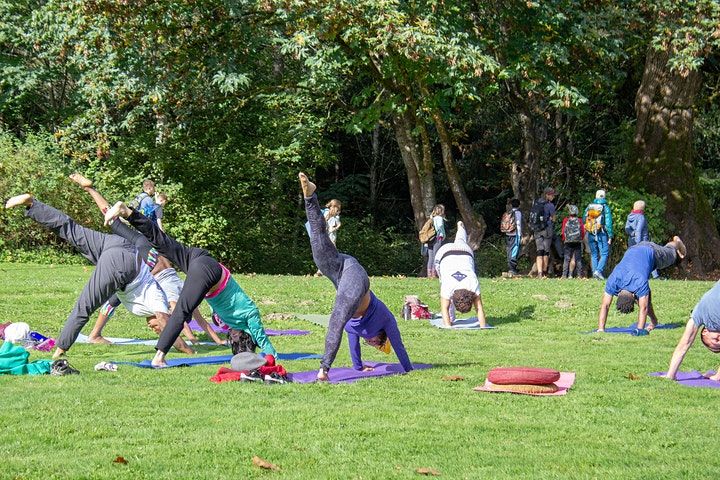
Powell, who splits her time between Seattle and Houston, said this was how Refuge Outdoor Festival started five years ago. It’s a weekend-long outdoors event complete with camping, hiking, biking and a silent disco. It welcomes everyone with a welcoming invitation to members of the BIPOC and LGBTQ+ communities.
“A lot of people you know, more people than you would expect, have had situations like this, especially BIPOC community or queer trans folks have experienced this in the outdoors or just in life,” Powell explained. “We’ve all gone through these different situations.”
Powell said Refuge gives everyone the chance to connect with the outdoors and make new friends in a safe and welcoming manner.
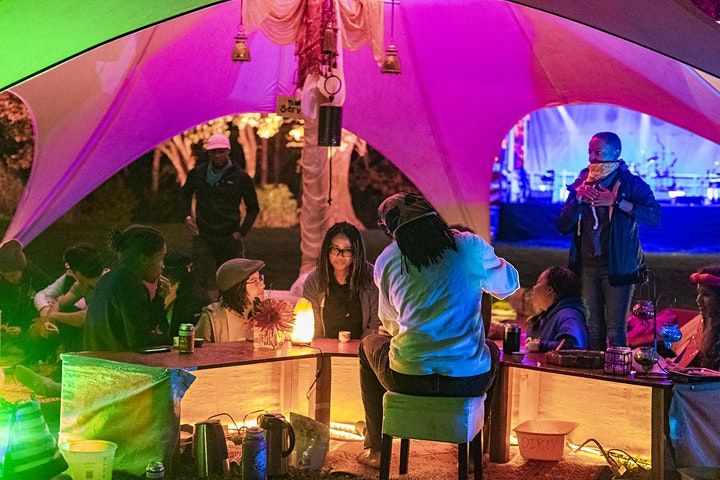
“It’s a full weekend of activities,” Powell said. “It’s all centered on outdoor recreation community building. We have over 30 workshops. We have Saturday musical performances and a silent disco.”
The event gathered 125 people in its inaugural year in 2018 and even gathered some virtual attendees and a limited in-person crowd last year due to the COVID-19 pandemic.
This year, Powell said Refuge is expecting more than 300 people.
“We’re creating the opportunity for people to pick up skills and learn how to safely recreate and feel comfortable going to state and national parks,” Powell said.
There is still time to register for a day or the full weekend event. For more information, click here.
The fifth annual Refuge Outdoor Festival will be hosted in Tolt MacDonald Park from Friday, Aug. 12, through Sunday, Aug. 14. The festival is hosted by Golden Bricks Events, which also hosts events like Sundaes Outside. Refuge is a camping experience that centers around BIPOC but is open to anyone interested in the outdoors, whether that means people with years of experience mountain biking, or someone who simply enjoys their local park. The event still has tickets available through the Refuge Outdoor Festival website leading up to its opening on Aug. 12.
“Refuge Outdoor Festival is the first event that we created,” Chevon Powell, founder of Golden Bricks Events and Refuge, told the South Seattle Emerald. “And it was really to center BIPOC community and allies in the outdoors, building community through outdoor recreation, music, and a weekend together to take refuge from all of the everyday things, because the outdoors can be so powerful.”
This is the fifth year Golden Bricks is hosting the event and its third year in person, after the event was held virtually during the pandemic for two years. But Refuge is back in full force this year, bringing in some new elements, like partnering with Rain Or Shine Community Market for a big partner market on the second day of the festival, and featuring over 25 workshops and activities throughout the festival. This year, it will even host a screening of Expedition Reclamation, a film featuring 14 BIPOC women who redefine the idea of “outdoorsy.” It will also feature music as well as a silent disco where attendees can use headphones to jam out to music together, giving them options to do what they feel most comfortable with in the outdoors.
For Powell, starting Refuge was a way to center and uplift BIPOC in the world of the outdoors, which has a reputation for being predominantly white, with many barriers to access for BIPOC. Ironically, Powell said that all people have been sustained for generations by having some connection to the outdoors, but many younger BIPOC may be alienated from that connection because of racial and socioeconomic barriers. Golden Bricks and Refuge work first to alleviate some of those barriers, and then to center and uplift BIPOC in the outdoors.
“A lot of our work is behind the scenes and making sure that folks have the resources and the knowledge, the transportation, the gear,” Powell said. “So we work with our partners to make sure that no matter what level of outdoor engagement you’re at, you can be fully supported to come and take refuge. Because we all know that nature and being connected to the outdoors, be it outdoor recreation, be it working in the garden, has so many health benefits.”
The festival aims to bring people into the outdoors in any way that is comfortable or best for them — there is no pressure to become a regular mountaineer, but simply to nurture the connection you do have with the outdoors and with the community you find in it.
“What does it look like for us to have our connections with nature? It looks like taking a walk around the block, it looks like adventure travel,” Powell said. “It can look like a variety of things, and I try not to define what that is for other people. For me, refuge in the outdoors has been and will continue to be about healing. We have a lot of healing to do personally and as a community, and as a world, and nature actually helps guide me in those ways.”
Some of Refuge’s past attendees have been as young as 3 months old and as old as 72 years old, and have included entire multigenerational households and families. In light of its attendees’ diverse knowledge levels, every festival starts with a basic course on coexisting with wildlife, so people with less outdoor experience can gain some of the information they need to get comfortable. Most of their activities are done in groups as well, so people with less outdoor experience can pair up with people with more outdoor experience for more challenging activities.
“Many people come to Refuge because they say, ‘I thought I was the only BIPOC person outside,’” Powell said. “And to see the robustness of this community is just really heartwarming. And that’s why people’s levels of engagement may look different. But we’re here for the same purpose — that we want to be outside, that we want to connect. We want to build community. And frankly, we want to have a good time together for a weekend.”
Powell’s passion for bringing people together in the outdoors and helping BIPOC feel connected to the outdoors comes from her own experience, starting quite young. Powell grew up going to a camp for burn survivors, hiking and enjoying nature. But she found there was a stigma that spending time outdoors was simply not something Black folks do, and kept quiet about her passions — until she had a police incident while in the outdoors that made her realize she couldn’t be quiet anymore and continue to feel like she was not seen or welcomed in the outdoors.
“I had a police incident, and that’s where this all stemmed from for me in wanting to build a safer community outdoors, because for various Communities of Color, the outdoors has not been safe,” Powell said. “I just want to see a better world, I want to see a more inclusive and more caring world. And I think that outdoor recreation can assist in that in building a different way of being. We are all longing and searching for community, and I think that this is just the vehicle that I use to help build community and connection.”
Powell sought to build a community that she wasn’t seeing in the outdoors. And at Refuge, programming is not just intended to help attendees find community, but also to encourage them to keep that community even after the festival is over. Refuge ends each year with a closing circle so attendees can reconnect and affirm the connections they made and the new resources they found over the weekend before they go back to urban life. Personal health has been shown to improve with outdoor recreation, but along with that, building communities and connections with other people in our areas is also vital to our community health, and keeps us safe.
“I hope that people take away a sense of belonging, a sense of connection,” Powell said. “I hope they take away a sense of, ‘I can go back [to the city] and be amazing, but I know that nature is always there for me, and I’m here for nature.’ Because we also want to make sure that people understand we have to care for nature just as much as we want to enjoy it.”
Amanda Ong (she/her) is a Chinese American writer from California. She is currently a master’s candidate at the University of Washington Museology program and graduated from Columbia University in 2020 with degrees in creative writing and ethnicity and race studies.
📸 Featured Image: Refuge Outdoor Festival is back after two years of virtual programming, creating a space for BIPOC connection and healing outdoors. Pictured: Refuge Outdoor Fest at Tolt MacDonald Park in 2019. (Photo courtesy of Golden Bricks Productions.)
Before you move on to the next story …
The South Seattle Emerald is brought to you by Rainmakers. Rainmakers give recurring gifts at any amount. With over 1,000 Rainmakers, the Emerald is truly community-driven local media. Help us keep BIPOC-led media free and accessible.
If just half of our readers signed up to give $6 a month, we wouldn't have to fundraise for the rest of the year. Small amounts make a difference.
We cannot do this work without you.Become a Rainmaker today!
Trina Baker didn’t grow up hiking, camping or adventuring in the snow. However, as soon as she began walking outdoors with GirlTrek, a program designed to get Black women outdoors, Baker said she fell in love with nature.
“Hiking has been my spiritual place,” Baker said at a Washington State Parks and Recreation Commission work session today in Ilwaco, Washington, near Cape Disappointment State Park.
Now, Baker has made part of her mission to get other Black Washingtonians to head outdoors.
A recent survey by the Black Washingtonians Workgroup on Outdoor Recreation found fewer than 1.5% of State Parks visitors are Black.
Some barriers included safety concerns, a lack of access to transportation, and access to outdoor equipment, which can be expensive.
The 12-member workgroup surveyed Black Washingtonians about these barriers to participating in outdoor recreation. In addition, the group presented potential solutions to lower those barriers.
Reco Bembry, the workgroup’s facilitator, said learning more about these barriers is a critical conversation. However, he said, this discussion should be only the beginning.
“It’s a very critical conversation to have about ways to create greater humanity for our citizens, and I think outdoor recreation serves to do that a lot,” Bembry said.
The workgroup reviewed at least 76 scholarly articles, he said.
Talking to Black community members, the group found at least 57 barriers to getting outdoors. The biggest concern, Bembry said, is safety, especially for parents taking children outside.
“Outdoor Recreating While Black, in Washington, is a modern-day safety hazard,” Bembry said.
To help with potential hazards, a Black couple, Anthony and Marlie Love, created a travel show that rates how safe and comfortable they feel while traveling around the Pacific Northwest, similar to the green book that guided travelers across the country.
The Black community has faced more than 100 years of barriers to recreate in state parks, which were created through systematic racism and white supremacy, he said.
“Parks were set up specifically for people that don’t look like me,” Bembry said. “When parks and recreation as a whole was set up, it was a place for white citizens to go to get away from this diversity in the urban settings.”
In addition, he said, laws and norms have led to the oppression of Black, Indigenous and People of Color, or BIPOC, Washingtonians in the outdoors.
Now, parks have changed, Bembry said, which is something he’s noticed after spending around six decades outside.
“I also can still feel the barriers that exist,” he said.
However, Bembry said the racist system that set up parks is changing slowly.
“It’s like turning a cruise ship. It takes time,” he said.
In addition, adequate transportation can become a major barrier to getting people outside, as well as discretionary money for entrance fees, gas, and outdoor clothing, Bembry said.
To help with some of those struggles, Bembry and Baker recently held two outdoor events for Black Washingtonians, with transportation, food and entrance fees covered by Black Washingtonian groups and businesses.
Meeting up at a specific location to travel together can reduce transportation issues, Bembry said. In addition, communicating plans in-depth beforehand helps people understand what to expect, he said.
Good advertising, for example, attracted 68 people to a snow tubing trip in March – it was designed for 30 people.
“That’s a good problem to have,” Baker said.
Bembry said Black people tend to trust community members who are planning and leading events, such as Black People Who Hike or Outdoor Afro. These groups can help people learn how to get outdoors, a significant barrier when first starting out, Bembry said. People seem to be more comfortable initially going outdoors in large groups with 10 or more people, he said.
“You’d be surprised about how many people in multiple communities around this country don’t know how to set up a tent,” Bembry said. “These are simple learning lessons that a lot of people are uncomfortable with and just need to learn.”
A little bit of help from more experienced people can go a long way, he said.
Experienced community members also can help Black people overcome generations of what Bembry called historical trauma, which leads to a fear of nature, Bembry said. He said he still remembers his grandmother telling him not to go into the woods at night.
“A lot of folks are overcoming that fear,” he said. “It takes one, two or three trips for folks to really get over that completely. The risk and reward function kicks in about the second or third trip.”
In addition, equipment costs can create a hardship for people first looking to head outdoors, Bembry said.
For example, he said, hiking boots can cost $200 to $300.
For her part, Commissioner Sophia Danenberg, the only Black member of the Washington State Parks and Recreation Commission, said it’s also hard to know where to buy equipment when first heading outdoors. She purchased her first outdoor equipment from Goodwill, including an external-framed backpack formerly used by the Boy Scouts.
Moreover, Washington State Parks needs more inclusivity in its own hiring, volunteer development, and vendor partnerships, said Chevon Powell, a member of the workgroup who owns the outdoor event company Golden Brick Events.
Earlier in the meeting, Valerie Roberts, State Parks Volunteer Program manager, said the Volunteer Program is building relationships with new volunteers from many communities in Washington.
For her part, Danenberg said State Parks isn’t diverse in its employment or volunteers. At an event in Goldendale last week, she said she saw one other person of color.
“I’ve got to say, I saw one Black woman, and just as I was about to be like, ‘Hey Girl!’ when I realized that she was part of Gov. Inslee’s security detail,” Danenberg said.
To increase diversity, equity and inclusion when dealing with the public, she suggested increasing diversity training and the diversity of camp hosts at state parks.
To make camp hosting easier, Commissioner Mike Latimer said State Parks could look at creating camp host positions in places with yurts or cabins so that hosts don’t have to buy their own RVs.
However, Danenberg said, it’s difficult to bring in more diverse volunteers.
“You’re effectively asking for free labor from people who have been denied the ability to build generational wealth,” Danenberg said.
Next, Bembry said, the state needs to study more deeply how Black Washingtonians recreate outdoors, including focus groups and a more extensive survey of people who don’t already visit state parks.
“Reconnecting with nature is an inalienable right,” Bembry said.
The Seattle chapter of the Audubon Society announced that it is dropping “Audubon” from its name because of its association with white supremacy.
There are hundreds of state and local chapters of the National Audubon Society, the nonprofit dedicated to protecting birds and their habitats, but Seattle Audubon is one of the largest in the country.
Earlier this month, the board voted to change the chapter’s name because the man the organization is named after – illustrator, painter and bird lover John James Audubon, author of the seminal work “The Birds of America” – owned enslaved people and opposed abolition.
J. Drew Lanham, a former board member of the National Audubon Society and a wildlife ecology professor at Clemson University, called the move courageous.
Lanham, who has written about Audubon and left the national chapter over concerns the nonprofit was not doing enough about racial equity, says organizations need to grapple with what to do about monuments that represent the worst of humanity. Names are part of that, Lanham said.
Audubon was a “genius artist in many ways but a despicable human being,” Lanham said.
“To excuse inhumane acts as just being in the context of their time is, I think, a lazy excuse,” Lanham continued. “Those are the excuses the privileged tend to lean on when they don’t want to make changes.”
Lanham added that it is particularly important for conservation efforts to strive toward diversity and inclusion because environmental conditions often impact Black, Indigenous and other people of color the most.
Sundaes Outside
/
Golden Brick Events
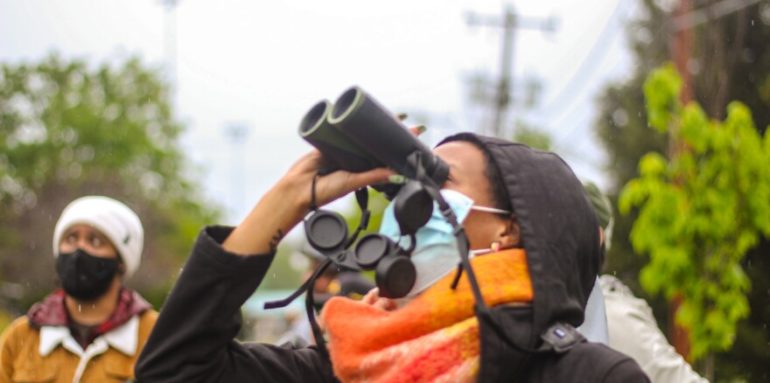
Chevon Powell’s event production company Golden Bricks organizes events including the Refuge Outdoor Festival and Sundaes Outside to offer inclusive outdoor experiences for Black, Indigenous and other people of color.
Chevon Powell, who five years ago started King County’s Refuge Outdoor Festival, which is specifically geared toward diverse communities, called the decision to change the chapter’s name long overdue.
Powell says those who take up birding will slowly learn about the history and then might think to themselves “oh, actually, this space isn’t for me.”
Powell says without significant changes – such as the stripping of names of white supremacists – “eventually, some folks will be like ‘I’m going to step away from this.”
Last year, the Audubon Naturalist Society, a Washington, D.C.-based environmental organization, announced it, too, would be removing “Audubon” from its name, but it is not affiliated with the National Audubon Society. Seattle Audubon is the first large chapter of the National Audubon Society to signal its intention to change its name.
Louis Agassiz Fuertes
/
Public domain, via Wikimedia Commons
Bachman’s Warbler, one of two birds named after the Rev. John Bachman and illustrated here by Louis Agassiz Fuertes, is likely extinct.
Claire Catania, executive director of Seattle Audubon, said discussions about a possible name change at the organization coincided with larger questions about the role of racism in the United States that arose in 2020 as protests over police brutality erupted across the country.
Soon after, dozens of American birding experts launched “Bird Names for Birds,” a campaignto change the names of birds named after white men who perpetuated colonialism and racism. For example, the group has pointed to the need to change the name Bachman’s Sparrow, a bird named after the Reverend John Bachman, a former slave owner.
Catania says the biographies of Audubon and others whom birds are named after have taken their majority white membership by surprise.
Still, she says she hopes other chapters will study the issue and make similar changes.
“It’s our hope that by making this public declaration now we can blaze a trail that hopefully will be easier for others to follow,” Catania said.
In the end, Seattle Audubon says its main goal is for more people to feel welcome in spaces dedicated to conservation.
Seattle Audubon plans to hold a listening session on Tuesday, and choose a new name by the end of the year.
For many people, getting outside can be a chance to relax and unwind. For people of color, it can also mean having to deal with racism.
People of color and their allies gathered outside Seattle last weekend at a festival aimed at changing that.
At the Tolt-Macdonald Park in Carnation, a deejee played music while attendees of the second annual Refuge Outdoors Festival line up for pancakes.
Chevon Powell founded the festival after an incident when a policeman pulled her over in Vermont and wouldn’t believe she was there to go hiking.
She said she wanted to create a safe space and also build community.
“It’s not just a fun weekend. It’s about learning the skills, sharing the skills. People can get connected in the local area so that they can continue to do outdoor activities and so they can feel comfortable doing those beyond this weekend,” Powell said.
RefugeFest is back and better than before! Join us in-person, virtually, or both for outdoor recreation, community building, & fun!
Now in its fourth year, the Refuge Outdoor Festival is the only Black, Indigenous, People of Color-centered camping festival in the Pacific Northwest and online!
New to exploring the outdoors? Expert in all things outdoors? Just want to kick it? This event is for you! Choose your adventure- you’re free to do as much or as little as you would like. All ages, experience levels, and people are welcome (BIPOC and allies).
Whether you campout or camp-in, there is something for everyone!
Each weekend will include:
– Workshops & Activities
– Performances
– DJs
– Art
– Swag & Giveaways
– Loads of learning, information and connections!
RefugeFest Campout
Aug 13-15th, 2021
Squire Creek Park
We are thrilled to host Refuge in-person at the beautiful Squire Creek Park in Arlington, WA. Who’s ready? We ready! Ready to gather again and enjoy time together in community. COVID is still real out here. We will be enacting COVID precautions, including social distancing, so in-person spots are limited. Our guidelines are shared on the Refuge FAQ page , check it out to see how we can work together to make this as safe an experience as possible.
SCHEDULE HIGHLIGHTS
Friday
2:00pm- 10:00pm Check-in
5:00pm- 7:30pm Outdoor Recreation & Workshops
7:00pm- 8:30pm Welcome Experience
9:00pm- 11:00am Evening activities
Saturday
8:00am- 4:30pm Outdoor Recreation & Workshops
5:00pm- 7:00pm Partner Market
7:30pm- 9:00pm Concert
10:30pm- 12:30am Silent Disco
Sunday
9:00am- 11:00am Outdoor Recreation & Workshops
11:00am- 12:00pm Closing Circle
RefugeFest Camp-in
Sept 17-19th, 2021
Hopin platform
While we are excited to gather in person, we know that everyone does not have time and resources to attend in person. So, we are thrilled to continue to host our virtual camp-in. Back for the second year, RefugeFest Camp-in will host a variety of engaging workshops, artists, films, and more that highlight BIPOC connecting with the outdoors.
SCHEDULE HIGHLIGHTS
Friday
3:30pm- 6:00pm Affinity Group & Workshops
6:30pm- 8:00pm Welcome Experience
8:00pm- 9:00pm Evening activities
Saturday
9:00am- 5:00pm Outdoor Recreation & Workshops
5:00pm- 7:00pm Partner Market
6:30pm- 8:00pm Concert
8:30pm- 9:30pm DJ Battle
Sunday
9:00am- 11:00am Outdoor Recreation & Workshops
11:00am- 12:00pm Closing Circle
TICKET INFORMATION
Step 1: Select your campout or camp-in festival pass (Options: Sustainer, Early Bird, Youth)
Step 2: Select your lodging (Options: Tent site, RV/Campervan)
Step 3: Select payment (Options: Eventbrite, PayPal, Venmo*, Check) *If you’re not paying via Eventbrite, visit www.refugeoutdoorfestival.com/tickets for payment instructions.)
All registrants who wish to join the campout in-person must read and sign our electronic Release Agreements prior to arriving onsite.
If you do not wish to sign, unfortunately you will not be permitted to attend this event. This holds true for all attendees.
By purchasing a ticket you agree with the following:
* Golden Bricks Events reserves the right to refuse admission or to eject a pass holder for behavior likely to cause damage, injury, or nuisance. This is a hate-free, safer space. If a pass holder’s behavior is unbecoming of policies that Golden Bricks has set forth, ejection will be immediate. Intoxication or aggressive behavior is unacceptable and will result in ejection from the park. Those ejected from the venue will not be readmitted to the event and tickets will not be refunded.
SPONSORS & PARTNERS
Community partners: Y-WE, RVC, Girl Trek
In-kind: Patagonia, MSR, Therm-a-Rest
Sponsors: Washington Trails Association, The Wilderness Society, The Mountaineers, Bike Works, Seattle Audubon, Mountain to Sound Greenway Trust, Evo, WA State Parks Foundation, REI, WA State Parks, Feathered Friends, Friends of Seattle Waterfront, National Parks Conservation Association, The Nature Conservancy
Fri Aug 12 2022 at 03:00 pm to Sun Aug 14 2022 at 12:00 pm
Location
Tolt River-John MacDonald Park | Carnation, WA
Advertisement
Refuge Fest is the premier camping experience geared toward Black, Indigenous, People of Color (ALL are welcome)! About this Event
REFUGE IS BACK! #LeetsMeetOutside
You BELONG outside. Join us for the 5th annual Refuge Outdoor Festival campout. 3-days and 2-nights filled with opportunities to feel liberated and free. Leave rejuvenated and connected.
ALL bodies are welcome at Refuge– Black, Indigenous, People of Color, Allies, Queer, Trans, Disabled. New to exploring the outdoors? Expert in all things outdoors? Just want to kick it? This event is for you! This event is to build community and take refuge. While no space is safe for everyone; we design for emotional and physical safety, accessibility, connection, joy, and belonging. All ages, all experience levels, all people are welcome, sorry only service animals.
Schedule to include a variety of activities including justice conversations, physical recreation opportunities at various levels, healing practices, art creation, and musical experiences. AND of course our silent disco & partner market. Choose your adventure, do as much or as little as you would like.
You have options! Camping at Refuge Fest isn’t just in a tent. We offer a number of camping options including open field camping, private car camping, RV or Campervan sites, REI pre-set camping, and 6-person yurts with electricity.
www.refugeoutdoorfestival.com Follow us on Instagram
What to expect:
Black, Indigenous, People of Color and Allies
A Safer Space
Outdoor Recreation Activities & Workshops
Musical Experiences
Community Service Project
Camping Options
Food & Camp Cooking Options
Resource & Vendor Market
Art
Fun
Did we mention fun?!!!
Do as much or as or as little as you would like.
This is for you if you:
Are a BIPOC person that wants to build community with other BIPOC folks.
Are a white person that respects, supports, and want to build community with BIPOC.
Have an interest in the outdoors but don’t know where to start.
Love the outdoors and are looking for a community to share it with.
LOCATION
Ancestral lands of the Snoqualmie. Prior to white settlement of the Snoqualmie Valley in the late 1850s, this area was home to several large permanent winter villages occupied by the ancestors of members of the Snoqualmie Tribe. The 575-acre Tolt-MacDonald Park and Campground is located in Carnation at the confluence of the Snoqualmie and Tolt Rivers in the beautiful Snoqualmie Valley. Because this is high-quality salmon habit, during the fall, visitors can observe chinook salmon spawning in the river below while eagles and osprey soaring above.
King County’s Tolt- MacDonald Park & Campground
Carnation, WA
TICKET INFORMATION
Step 1: Select your festival pass (Options: Adult, Kid, Youth)
Step 2: Select your lodging (Options: Field Camping, Private Car Camping, RV or Campervan, REI Pre-set 2-person Camping, Yurt)
Community partners: Y-WE, Urban Wilderness Project, EPOC, Rainier Valley Corps, Outdoor Asian, Brown Girls Climb, Girl Trek, Brown Girls Write, Co3 Consulting, Climbers of Color
Sponsors: Washington Trails Association, The Wilderness Society, The Mountaineers, US Forest Service, Bike Works, WA State Fish & Wildlife, Seattle Audubon, National Wildlife Federation, Mountain to Sound Greenway Trust, Evo, Conservation NW, WA State Parks Foundation, REI, WA State Parks
FREQUENTLY ASKED QUESTIONS
Q: Who can come?
A: All are welcome, Black, Indigenous, People of Color (BIPOC) and allies. This event is meant to be a safer space for People of Color outdoor enthusiasts and novices to celebrate and explore in one amazing weekend.
Q: Can children come?
A: Yes. Kids under 8 are free. We are building an intergenerational event and community. Bring your kids and grandparents- all are welcome.
Q: Are children free?
A: As of 2021, we have changed our child policy for our in-person event. A ticket purchase is required for children six years of age and older. Children age five or younger are free with a ticketed adult.
Q: Can I bring my dog?
A: Only service dogs are allowed at Tolt-MacDonald Park during the festival.
Q: Is this event ADA accessible?
A: We strive to create an inclusive and accessible event for all to engage and enjoy; building safer outdoor experiences for our community is our mission. Accessibility encompasses many diverse needs. We are committed to continuing to make Refuge as accessible as possible including questions in the registration. If other accommodations are needed, please email [email protected].
Q: I would love to camp but I don’t have gear?
A: No problem. With the support of our partners and sponsors we have gear that attendees can access for the weekend; including tents, sleeping bags, and more. Gear requests can be submitted until August 8, 2021.
Q: Will the event be canceled if it rains?
A: No, the festival will happen rain or shine.
Q: Are there bathrooms? Showers?
A: There will be a number of portable restrooms and pit toilets open at the event. Unfortunately, there will not be showers open during the event.
Q: Can I leave the festival grounds and re-enter?
A: Yes, re-entry is allowed.
Q: How are you addressing COVID risks during the campout?
A: We are continuing to monitor CDC and local guidelines. Closer to the event we will publish our COVID-19 Safety Plan here. Our plans will comply with the latest guidelines released by the Washington State Governor’s Office and Public Health, the City of Carnation & King County.
Q: Do we have to be vaccinated to attended the festival?
A: No. While we highly encourage people to get vaccinated, we understand and respect each individuals right to make this decision.
Q: What will we be doing?
A: We are curating a list of activities and workshops during the festival but we encourage you to participate as much or as little as you would like.
Q: Will the gear be provided for activities?
A: Most activities do not require gear. We are encouraging you to bring your own gear onsite such as bikes and water activity items.
Q: What should I bring?
A: There are a number of lodging and activity options to choose from for your festival experience. Things to consider. You will need to bring your own camping supplies based on your lodging selection and food needs. Field camping is in a open field, which means you need to bring your own tent, sleeping bag, and so on. Dress and plan according to the activities you would like to participate in and the weather.
Q: How do I get there?
A: We recommend carpooling with other festivalgoers, there is free parking onsite. Additional transportation options will be posted in early July.
Q: Can I cook onsite?
A: Yes, you will need to provide your own food and specialized equipment. We will have a camp kitchen where you can sign up to use a stove, knives, cutting boards, and so on. There will be food for purchase onsite.
Q: Are you still accepting sponsors?
A: Yes, we actively seek opportunities to collaborate with organizations and individuals whose missions, values, and work align with our own. Reach out to us at [email protected].
Q: I can’t attend. How can I donate?
A: Thank you so much for donating to Refuge Outdoor Festival. Planning this event isn’t cheap, but together as a community, we will make this event happen! Funds raised go toward supporting community access. Donations can be made via Paypal.
Q: I have another question/concern. Who can I reach out to?
A: Feel free to reach out to [email protected] for further concerns.
By purchasing a ticket you agree with the following:
* Golden Bricks reserves the right to refuse admission or to eject a pass holder for behavior likely to cause damage, injury, or nuisance. This is a hate-free safe space if a pass holder behavior is unbecoming of policies that Golden Bricks has set forth ejection will be immediate. Intoxication or aggressive behavior is unacceptable and will result in ejection from the park. Those ejected from the venue will not be readmitted to the event and tickets will not be refunded.
Don’t miss out on the fun.
Advertisement
Where is it happening?
Tolt River-John MacDonald Park, 31020 Northeast 40th Street, Carnation, United States
Sundaes Outside: A Celebration of Black Folks will be held at Be’er Sheva Park this Sunday, May 15. The event will be an outdoor music and market space, featuring a number of performers and partners.
“Sundaes Outside was just really created to celebrate Black folks and nature, and create an experience for folks that come out to the parks on Sundays,” Chevon Powell, organizer of the event, said in an interview with the South Seattle Emerald. “But also just to check out the different ways we can be outside — which means you can be outside in your backyard, in your neighborhood, you can be outside in a state park, you can do lunch or recreation, you can camp.”
Golden Bricks Events, a small business working on different projects and events around diversity, equity, and inclusion in the outdoors, geared toward creating safe spaces for BIPOC folks in the outdoors. Powell founded Golden Bricks in 2018 to cater to communities in the Puget Sound area.
One of the first events Powell launched with Golden Bricks was the Refuge Outdoor Festival, a three-day camping experience geared toward People of Color and their allies. The event centers on community building and includes workshops and arts and other outdoor activities. The fifth annual Refuge Outdoor Festival will be held this year from Aug. 12 to 14.
“One of the things [in planning Sundaes Outside] was like, how do we get connected to the folks that are in that area” Powell said. “Because we do want it to be of service to that community there. And the outreach that we’ve been doing in the marketing has really been centered on South End-inviting.”
Powell says that while working down in South Seattle, Golden Bricks must be cognizant of the fact that the community is continuously under-resourced and under-connected, especially to outdoor spaces. So for all of their events, they are actually providing guests transportation from South Seattle to these other activities and state parks.
“We think it’s important to provide access so that there’s greater connections, and we understand that the Black community that has continuously been pushed down to the South End [is who] we want to serve,” Powell said. “Providing different ways to connect to nature is what we want to do.”
It has been a common fallacy that BIPOC are uninterested in spending time outdoors — however, it has actually been found that 70% of BIPOC participate in outdoor activities. The problem is not interest, but access due to socioeconomic status — only 23% of visitors to national parks are BIPOC. When BIPOC do participate in outdoor activities with higher barriers to access, spaces can often be unsafe, as has been the case for Powell.
“As an African American woman that had a traumatic experience in the outdoors, I want to create safer experiences for people that look like me,” Powell said. “I know that a lot of people that look like me go outside, so I also want to showcase them. But at the end of the day, there needs to be a narrative change around the outdoors. And if I can do anything to support that, and uplift that, that’s what I’m going to do.”
📸 Featured Image: (Photos: Golden Bricks Events with editing by the Emerald Team)
Before you move on to the next story …
The South Seattle Emerald is brought to you by Rainmakers. Rainmakers give recurring gifts at any amount. With over 1,000 Rainmakers, the Emerald is truly community-driven local media. Help us keep BIPOC-led media free and accessible.
If just half of our readers signed up to give $6 a month, we wouldn't have to fundraise for the rest of the year. Small amounts make a difference.
We cannot do this work without you.Become a Rainmaker today!
Being among nature is known to be restorative. But while it might seem accessible to everyone, in the US the National Park Service found that — of the more than 300 million visitors a year to their parks — only about 25% weren’t white, despite minorities making up 40% of the population. That’s what an American woman named Chevon Powell has been working to change. Eilis O’Neill met up with her.


 is a Chinese American writer from California. She is currently a master’s candidate at the University of Washington Museology program and graduated from Columbia University in 2020 with degrees in creative writing and ethnicity and race studies. There, she was involved with Asian American student activism and completed a thesis on immigrant family stories and orientalism. Amanda has recently been awarded second place for the Bristol Short Story Prize, and completed a zine about radical self-love. In both her creative writing and journalism, Amanda sees writing as a means to community building and empowering marginalized folks.</p>
<p>” data-image-caption=”</p>
<p>Amanda Ong</p>
<p>” data-medium-file=”https://i0.wp.com/southseattleemerald.com/wp-content/uploads/2021/11/AmandaOng_headshot.jpeg?fit=300%2C300&ssl=1″ data-large-file=”https://i0.wp.com/southseattleemerald.com/wp-content/uploads/2021/11/AmandaOng_headshot.jpeg?fit=474%2C474&ssl=1″ src=”https://i0.wp.com/southseattleemerald.com/wp-content/uploads/2021/11/AmandaOng_headshot.jpeg?resize=474%2C474&ssl=1″ alt class=”wp-image-77957 size-full” srcset=”https://i0.wp.com/southseattleemerald.com/wp-content/uploads/2021/11/AmandaOng_headshot.jpeg?w=722&ssl=1 722w, https://i0.wp.com/southseattleemerald.com/wp-content/uploads/2021/11/AmandaOng_headshot.jpeg?resize=300%2C300&ssl=1 300w, https://i0.wp.com/southseattleemerald.com/wp-content/uploads/2021/11/AmandaOng_headshot.jpeg?resize=150%2C150&ssl=1 150w, https://i0.wp.com/southseattleemerald.com/wp-content/uploads/2021/11/AmandaOng_headshot.jpeg?resize=400%2C400&ssl=1 400w, https://i0.wp.com/southseattleemerald.com/wp-content/uploads/2021/11/AmandaOng_headshot.jpeg?resize=200%2C200&ssl=1 200w” sizes=”(max-width: 474px) 100vw, 474px” data-recalc-dims=”1″></figure>
<div class=)



 Golden Bricks Events